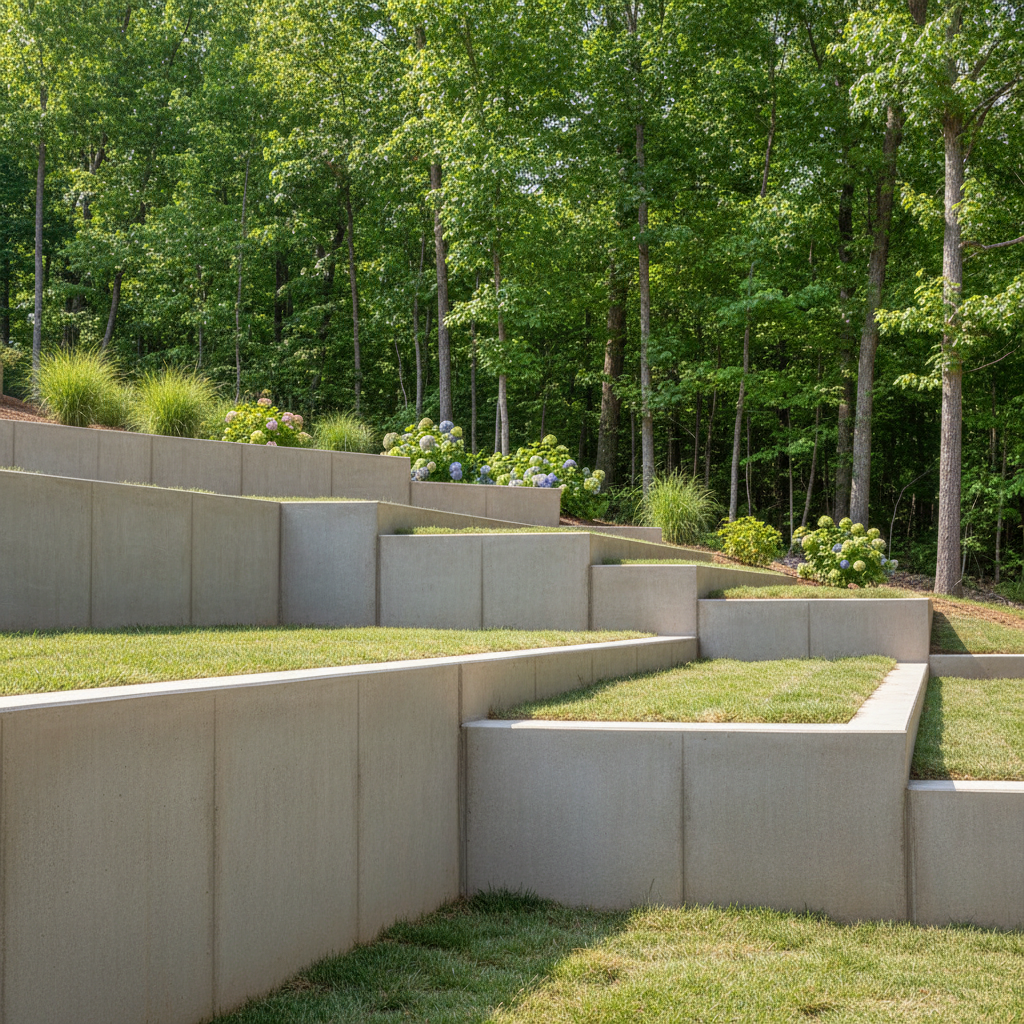
Ever seen a brand-new concrete retaining wall start bowing or cracking just a season or too after it was poured? Western Concrete Solutions has seen it happen more times than we care to count across Rhea County. Building a wall to hold back earth is not just about throwing up some forms and pouring concrete. Get a few important details wrong, and you are looking at a complete failure that costs thousands to fix.
Here is what you need to watch out for so you do not end up with severe buyer's remorse on your next hardscaping project in Dayton, TN.
Ignoring the Local Red Clay Soil
If you are building near Dayton Mountain or down toward Chickamauga Lake, you are dealing with heavy, active red clay. Clay swells up like a sponge when we get heavy spring rains and shrinks back down during dry summer spells. If your contractor does not account for this movement in the design, the hydrostatic pressure will crack that concrete right down the middle.
Skipping Proper Behind-the-Wall Drainage
Water is the absolute enemy of any retaining wall. Too many people skip the crushed stone backfill and weep holes to save a few bucks upfront. Without a clear path for water to escape, it pools behind the wall. Water weighs roughly 62 pounds per cubic foot. Multiply that by several tons of saturated Dayton clay, and you have essentially built an underground dam that is bound to blow out.
Failing to Check Height Restrictions and Engineering
You cannot just build a wall as high as you want without proper reinforcement. Walls over a certain height require structural engineering stamps and proper steel rebar grids. Western Concrete Solutions has walked properties where homeowners hired cheap labor to put up a tall wall without permits or reinforcement, only to watch the top half start leaning dangerously toward the driveway.
Falling for Lowball Bids
When you are gathering quotes, a radically low bid should immediately raise a red flag. If one contractor is thousands lower than everyone else, they are cutting corners somewhere. They are likely skipping the sub-base compaction, using inferior concrete mixes, or leaving out the drainage gravel entirely. At Western Concrete Solutions, we see people calling us to tear out failed DIY or bargain-basement walls because the original installer vanished when the cracks started showing.
Take your time, make sure your contractor understands local weather and soil conditions, and never compromise on drainage. Doing Concrete Contractor work right the first time is a lot cheaper than doing it twice.