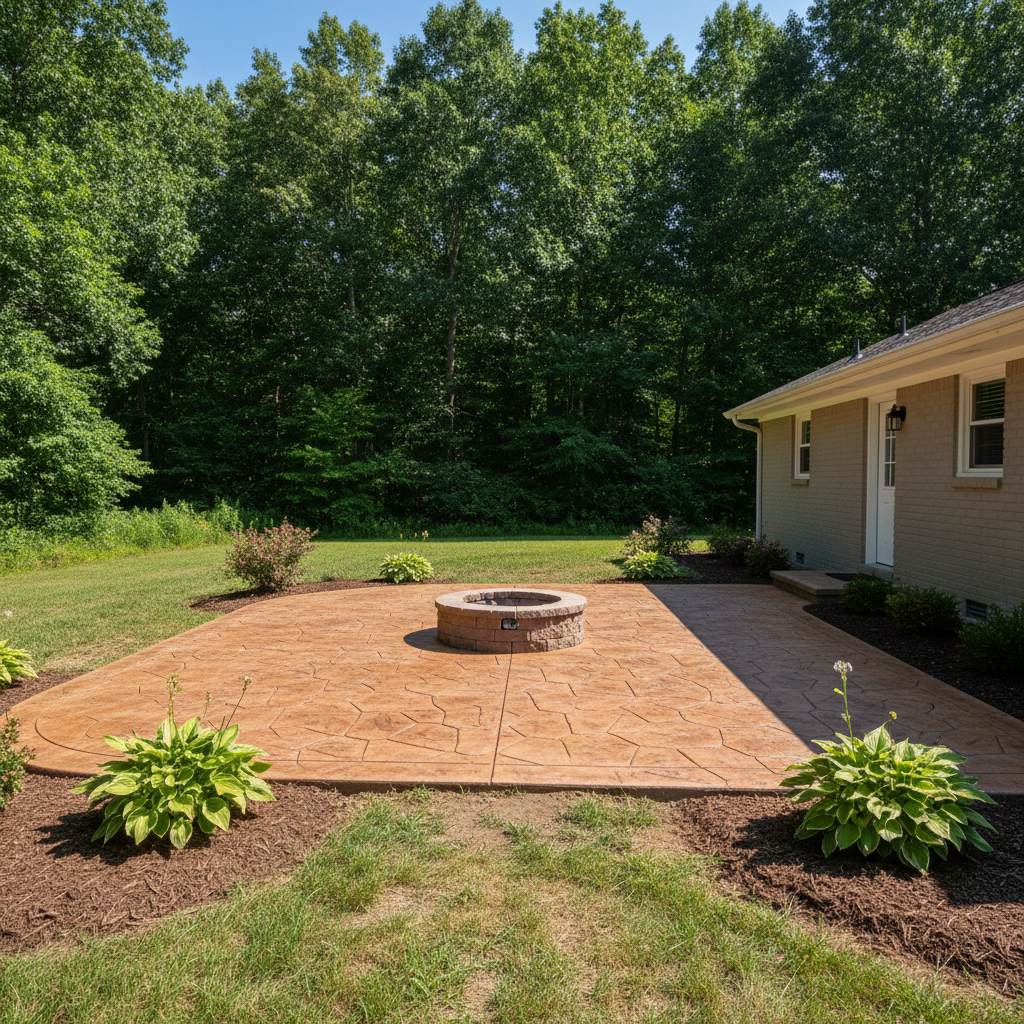
So, you're thinking about decorative concrete, huh? Smart move. It's a fantastic way to add some serious curb appeal and value to your property here in Dayton, whether it's a new patio, a spruced-up driveway, or an indoor floor that really pops. But let's be real, the first thing on most folks' minds is, "What's this going to cost me?"
You'll hear a lot of "it depends" out there, and while that's true to an extent, I'm going to give you some real numbers based on what I've seen working with homeowners and businesses around Rhea County. I want you to walk away from this knowing what to expect and how to make sure you're getting a fair shake.
What Makes Decorative Concrete Cost What It Costs?
A few big things really move the needle on pricing. It's not just about the square footage, though that's a big part of it.
- The Type of Finish: This is probably the biggest factor.
- Stamped Concrete: This is where we press patterns into fresh concrete to mimic stone, brick, wood, or other textures. It's labor-intensive and requires specific tools and expertise. You're looking at anywhere from $12 to $25 per square foot, sometimes more for really intricate patterns or multiple colors.
- Stained Concrete: This involves applying acid or water-based stains to existing or new concrete to create translucent, rich colors. It's generally less expensive than stamping, often running from $6 to $15 per square foot, depending on the prep work and number of colors.
- Polished Concrete: This is a multi-step process of grinding and polishing concrete floors to a high sheen, often used indoors. It's durable and low-maintenance but can be pricey due to the specialized equipment and labor. Expect $8 to $20 per square foot, with higher grits costing more.
- Epoxy Coatings: Great for garages, workshops, or commercial spaces. These are durable, chemical-resistant, and come in a huge range of colors and flake options. Basic solid color epoxy might start around $5 to $10 per square foot, while metallic or flake systems can go up to $12 to $20 per square foot.
- Size and Complexity of the Project: Bigger projects often have a lower per-square-foot cost because of economies of scale. Smaller, intricate jobs, like a winding walkway or a small patio with lots of cuts and curves, can have a higher per-square-foot price because they still require the same setup and finishing time as a larger area.
- Site Preparation: Is the area already cleared? Do we need to remove old concrete, dirt, or trees? Is the ground level? Significant excavation, grading, or demolition will add to the overall cost. If we're pouring new concrete, proper base preparation (like compacting gravel) is crucial, especially with our clay soils around Dayton that can shift if not properly prepped.
- Existing Concrete Condition (for overlays/staining): If you're staining or adding an overlay to existing concrete, its condition matters a lot. Cracks, spalling, or an uneven surface mean more prep work – patching, grinding, or resurfacing – which adds to the labor and material costs.
- Color and Sealer Choices: More colors, custom color blends, or higher-quality, UV-resistant sealers (which I always recommend for outdoor applications) will increase the material cost.
- Accessibility: Can our trucks and equipment easily get to the work area? If we have to hand-carry concrete or materials a long distance, that's more labor.
What's Included in a Western Concrete Solutions Quote?
When you get a quote from Western Concrete Solutions, or any reputable contractor, it should be pretty clear what you're paying for. Here's what we typically include:
- Material Costs: This covers the concrete itself, any color additives, stains, stamps, sealers, and rebar or mesh for reinforcement.
- Labor Costs: The crew's time for preparation, pouring, finishing, and cleanup.
- Equipment Rental/Usage: Specialized tools like concrete saws, power trowels, stamp mats, or polishing machines.
- Site Preparation: This might include excavation, grading, base material (like gravel), and removal of debris.
- Permits (if required): For larger projects, especially those affecting property lines or public access, permits might be necessary. We'll let you know if this applies.
- Warranty: A clear understanding of what's covered after the job is done.
A good quote won't just give you a single number; it'll break down these components so you can see where your money is going.
How to Avoid Overpaying for Decorative Concrete
Nobody wants to feel ripped off. Here's my advice for getting a fair price and a quality job:
- Get Multiple Quotes: Don't just go with the first guy. Get at least three detailed quotes. This helps you compare not just prices, but also what each contractor is offering.
- Check References and Portfolios: Look at their past work. Does it look good? Talk to previous clients. A cheap price isn't a deal if the work is shoddy and you have to pay someone else to fix it later.
- Ask for a Detailed Breakdown: Insist on a written quote that clearly outlines all materials, labor, and specific services. If it's just a single number, walk away.
- Understand the Scope: Make sure everyone is quoting on the exact same scope of work. If one quote is significantly lower, it might be because they've left something out.
- Don't Chase the Absolute Lowest Price: There's a reason some prices are dirt cheap. It usually means cutting corners on materials, labor, or experience. Concrete is a long-term investment; you want it done right the first time.
- Communicate Clearly: Be specific about what you want. Show them pictures, explain your vision. The clearer you are, the more accurate their quote will be.
Decorative concrete is a fantastic investment that can really transform your space. By understanding what goes into the pricing and how to vet your contractors, you'll be well-equipped to get a beautiful, long-lasting result without breaking the bank.