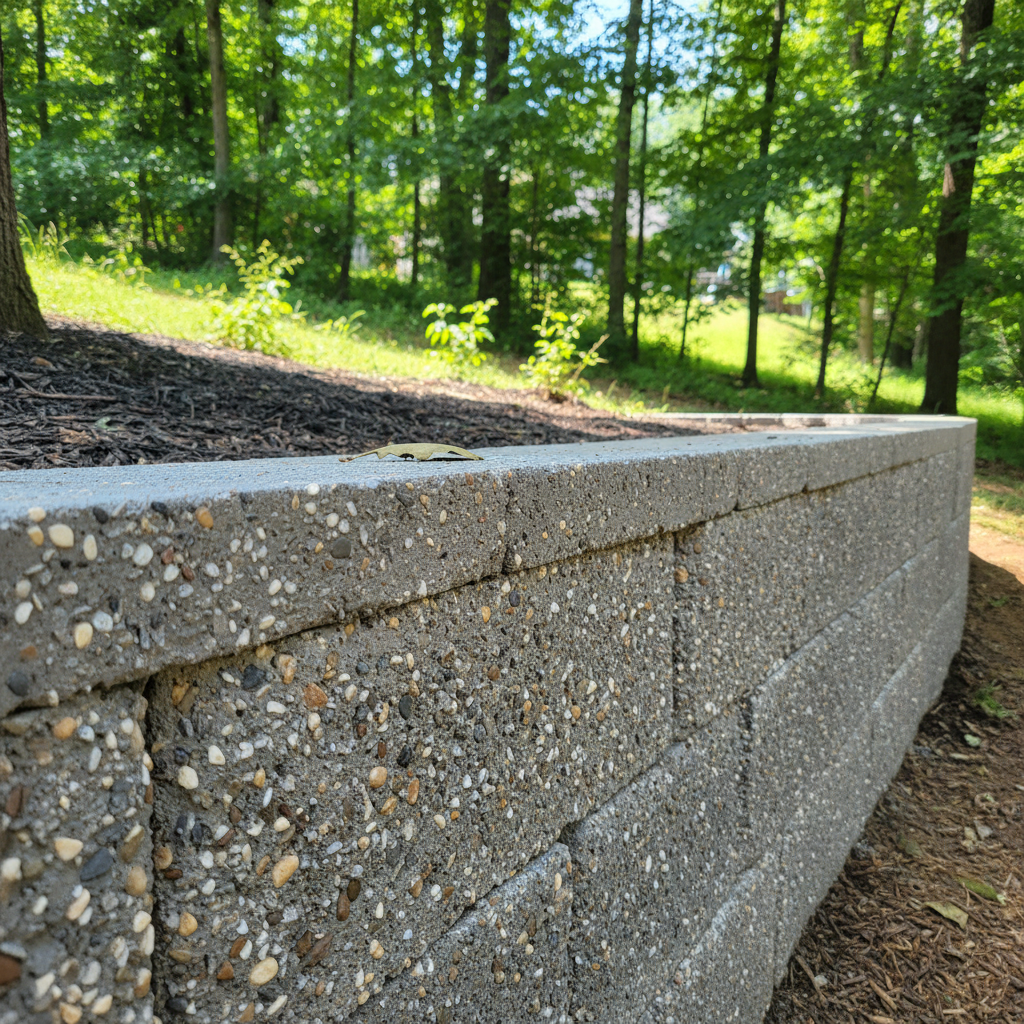
If you own a sloped piece of land around Rhea County, you already know that managing water and soil movement is a constant battle. Heavy spring rains turn hillside slopes into sliding messes, and standard landscaping timbers do not hold up for the long haul. That is why many property owners turn to poured concrete or modular block systems. Western Concrete Solutions gets asked a lot of questions about how these structures perform in our local terrain. Let us break down the most common things homeowners want to know before digging into a retaining wall project.
Why do Dayton soils make retaining wall design so important?
Most of our local terrain sits in the Cumberland Plateau foothills, featuring heavy red clay and variable silt deposits. When it rains heavily, that clay soaks up moisture, expands, and exerts massive hydrostatic pressure against whatever is holding it back. If a wall is not engineered to handle that weight, it will bow, crack, or outright collapse within a few seasons. Proper thickness, steel reinforcement, and deep footers below the frost line are key around here.
Do I need a permit for a concrete retaining wall in Rhea County?
That depends entirely on the height of the structure and where it sits on your property. Generally, if a wall rises over four feet tall from the bottom of the footing, local building codes require engineered plans and a permit. Even if your wall is shorter, you need to check setback lines and utility easements before using a single pickaxe. Skipping permits might save a few days upfront, but it creates a major problem if you ever try to sell your home.
How does water drainage actually work behind the wall?
Water is the number one enemy of any retaining wall. If you trap water behind the concrete without an exit strategy, the hydraulic pressure will break the material. Western Concrete Solutions always installs clean gravel backfill, filter fabric, and perforated weep holes or drain tile at the base. This lets water flow through or around the wall instead of building up against the back face. Never let anyone pour a solid barrier without a drainage plan.
Poured concrete versus segmental blocks: which is better?
- Poured concrete offers unmatched structural strength and custom shaping for high-load applications.
- Segmental blocks provide flexibility, handle minor ground shifts well, and require less heavy machinery to install.
- Poured walls last 15 to 20 years or more when done right, while blocks offer a more textured, classic look out of the box.
How long does the construction process take?
A typical residential retaining wall takes anywhere from 3 to 14 days depending on site accessibility and scale. The process starts with excavation and pouring a reinforced concrete footing. Once that cures, we set forms or stack blocks, install the drainage system, and backfill carefully. Weather plays a huge role too; a week of torrential spring downpours will stall excavation very fast.
Will a retaining wall fix my sloping backyard erosion?
Yes, by terracing a steep slope, you break a long hillside into manageable, flat tiers that grass and plants can anchor onto. This stops surface runoff from carving gullies across your lawn. Combined with proper grading around your driveway or patio, a solid wall protects your entire landscape investment from washing down toward the valley.